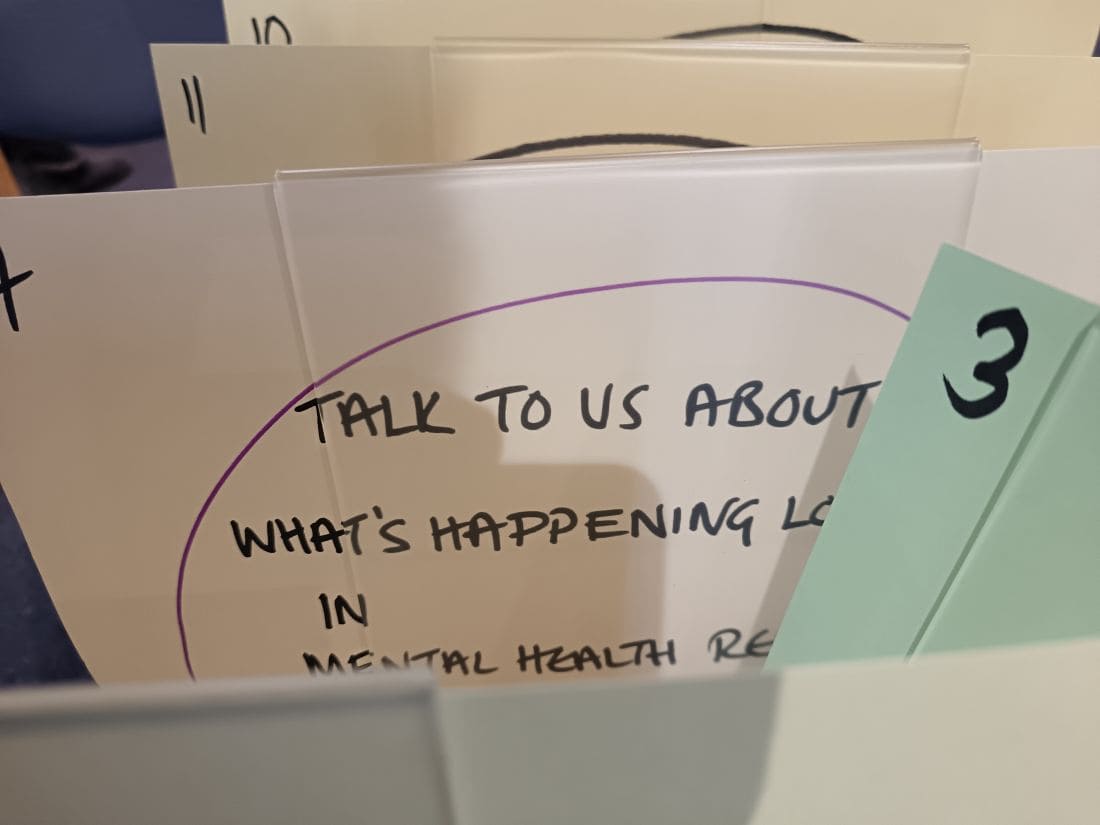
In a roomful of people, anything is possible. This is a big room. And there are a lot of people. So possibilities are endless. And judging by the calm intensity of the hubbub, they are all being explored at this PenARC pop up research cafe.
This is the second outing for Plymouth and Exeter Universities PenARC Pop Up Research Cafes from Plymouth and Exeter Universities the first was at the university in Exeter. Now we’re in Plymouth at the incredibly accommodating Plymouth Methodist Central Hall. In the vast hall there’s milling, hubbing and bubbing as members of the public mingle with researchers who want to enlist their wisdom, insight and experience.
Health solutions
Health solutions don’t sit solely on a spreadsheet or in a petri dish, but also out in the communities in which they serve.
Debbie Roche (the One in Three Club), Jane Horrell (a researcher for the Health Determinants Research Collaboration), and Gunel Ismikhanoval (Routes to Wellness) are happily sharing a table before we interrupt to find out why they are here. To know more about the projects, to get more information about what’s going on in the city and county, and maybe get involved and offer research where they might be useful, it turns out.
“It’s lovely to be given a chance to chat to people and find the common interests – you learn a lot,” says Jane.
“You want to feel free and relaxed to be able to talk about things that are really important. And you don’t want to be talked at.”
For Debbie the informality was key. “Talking about domestic abuse, you don’t want to be in a stuffy office. You want to feel free and relaxed to be able to talk about things that are really important. And you don’t want to be talked at.”
Jane says: “It’s those conversations that actually give people different perspectives, different ideas, rather than just someone giving you their knowledge.”
It allows people to turn up as a human being rather than a role. And the room was full of connecting possibilities. Gunel says: “I know a lot of people here, but there are others that I want to know.”
What you hear a lot is ‘PPI’, it means patient and public involvement. One person we talked to involved with PPI was asked to attend on behalf of the School of Nursing and Midwifery at Plymouth university. She is also a community volunteer and an NHS volunteer
Lives are complex
“I’m always looking for ways to get people more involved in their own health and getting services to people rather than people having to find the services. I’m very interested in complexity. Lives are complex and talking to people, taking services to them, is a way of dissecting that and finding out what people really need,” she says.
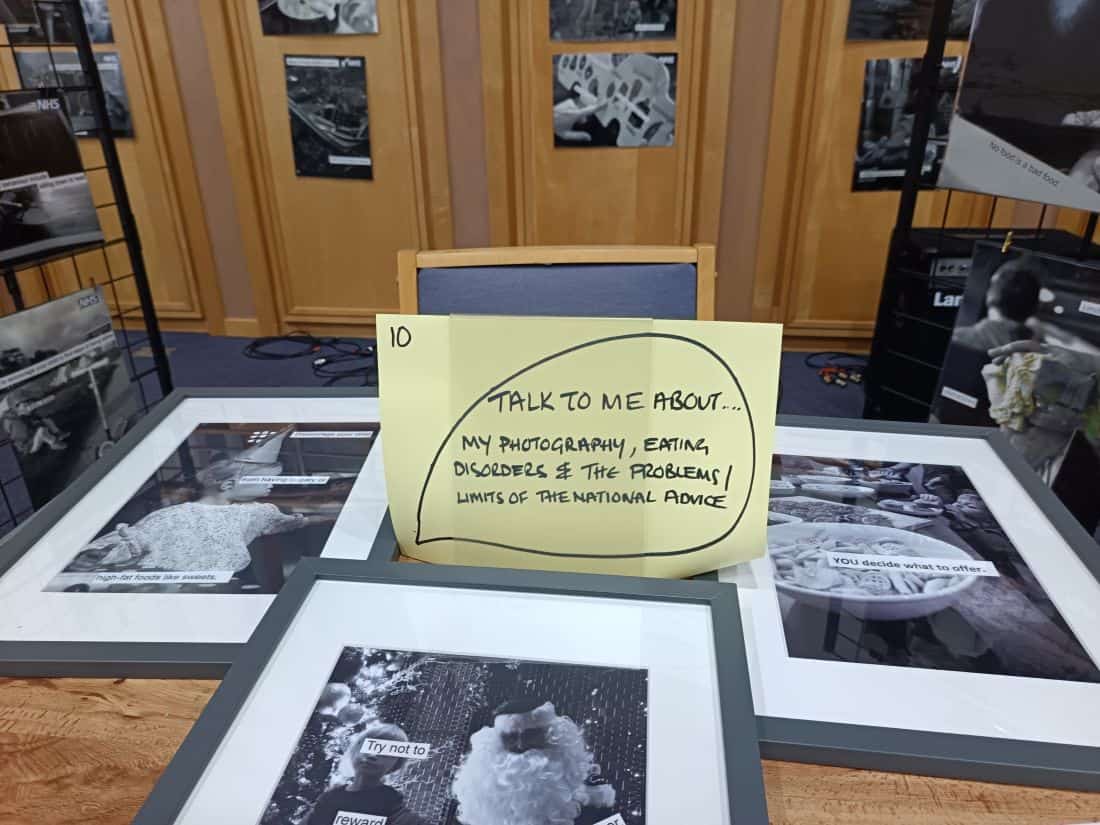 Ali Wills is up from Cornwall and aiming to set up a research cafe there in a few months’ time. She’s here to experience what one looks and feels like.
“It looks energising, it looks busy, it looks positive and it looks like there’s lots of great conversations happening,” she says.
Research changes lives
“I have just come from a table who are talking about how research has changed their lives and has also helped to inform changes to service delivery and practice within social work. There are a lot of stories of lived experience, which are emotional and powerful.”
Key take backs for Ali are the importance of food and drink, and the variety of people who attend with different roles, different experiences, and a lot of different conversations.
Becky is a community champion in the Whitleigh area of Plymouth. Becky works with the NHIR (now the now the Research Ready Network), volunteers, and is a youth champion, is in mentorship training and is the chair of a local community group, she tells me.
Getting the researchers ready for the community
“We’re here today to talk about what we’ve been doing out in Whitleigh,” she says. “And how we’re engaging the communities and the researchers. Our focus isn’t just getting the communities ready for research – it’s getting the researchers ready for the community.”
There has to be a level of trust, she says. “When you’re working in a community with vulnerable people, you have to understand the challenges that come with that. A lot of those challenges are the barriers as to why they’re not getting involved in research. How can the research world help support these people to take full advantage to support each other and make it work?”
One of the benefits, along with talking to people in the same area or with similar ideas, was connecting with researchers. And that was happening – they were there forging links with a research study.
“I’m looking forward to being able to provide opportunities on both sides,” says Becky.
The Breathing Space programme is a voluntary support service for parents in Torbay who have had a child removed from their care, which has been developed in response to local Torbay research with families, communities and Torbay Children’s services
Parents have been an integral part of shaping the service and are actively involved in delivering insight training to social workers. Additionally, they help facilitate drop-in peer support sessions, offering a space for parents to connect and support one another.
“We offer crafts, we do all sorts. It’s just a chill time. People can come and go if they want to, and we hope that we can help them with next steps,” says Emma.
Genuinely just chilled
They’re not here just to share their achievements, but “to say to researchers, how to get out there,” says Emma. “If you go somewhere suited and booted or do a questionnaire, you don’t get to know anything, really. If you go out and you’re genuinely just chilled, not suited and booted, don’t talk all the jargon and be a basic human being, so everybody can understand, then you might get a bit further with your researching.”
I share some sandwich-eating time with Zara from Improving Lives, who is looking to recognise the connections that are being made, the information that’s being shared, and for that synergy between people.
“I’m here because I revel in the goodness of people,” she says. “It’s nice to come here and chat to people in real time in an informal atmosphere.”
She’d swapped a lot of contact details, and mentioned an organisation that helps women get back into employment. “It is so hard to find that kind of useful information,” she says.
A PhD student was looking for people with lived experience to help them design their study. And someone from the Plymouth well being hub network stops by to explain what they’re about. Ten organisations across the city have 12 well being hubs between them, where you can get access to health, advice and information, physical activities, social groups, mental health support, and other activities.
It’s good to connect
Another researcher adds another dimension to the value of the pop up research cafe. “We quite often are very absorbed in our own research, and we’re not necessarily aware of what other people are doing – it’s good to connect.”
We caught up with a member of the Devon Mental Health Alliance, who tell us: “It’s been very successful I met a new a lot of new people in different contexts.”
Other feedback on the day spoke of connection, openness and the promise of continued conversations. As the event was closing, someone says: “If they engage people from the first step of their study, it will be amazing.”