
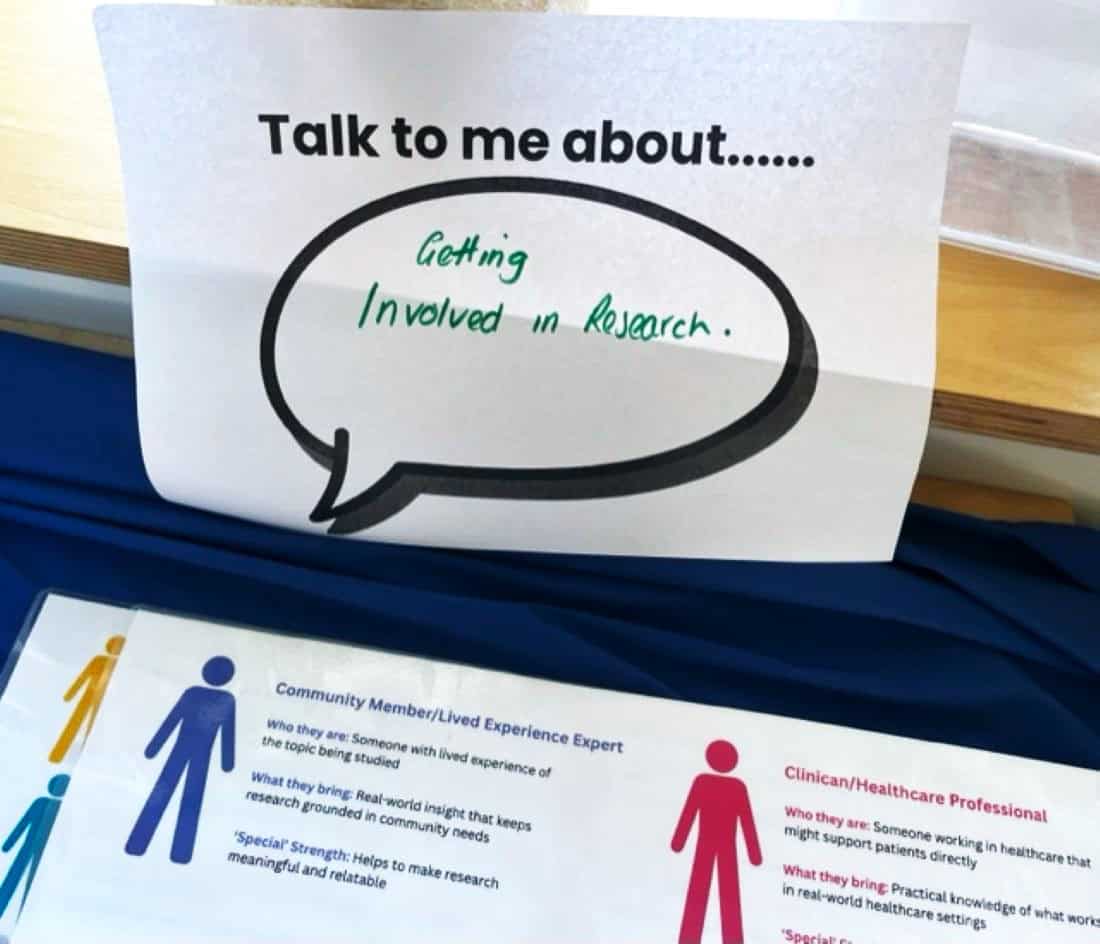
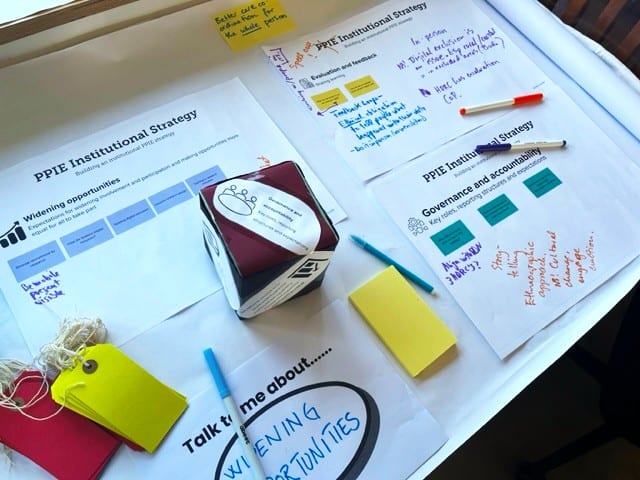
‘Curious conversations’ are at the heart of the Pop Up Research Cafe in Cornwall, where people and researchers come together to share info and inspire each other. Paul Hankin and Janette Breeze are combining their community listening role with being community reporters for C2.
“I’m really keen for people to have curious conversations that maybe leads to them doing things like you’re doing,” organiser Gemma of the Research Engagement Network in Cornwall, tells Janette.
Creating opportunities
The event is about creating opportunities in an informal, friendly environment, for people to find out about the research is going on in their local area. “Why it might be relevant to them and to have a conversation,” says Gemma.
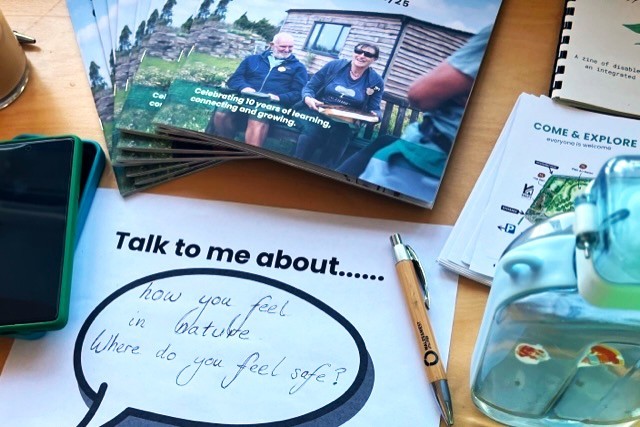
“I’m feeling the buzz of people talking to each other. Sometimes research feels like it’s something that’s not for us members of the general public. I do believe the research that’s carried out – especially in health and well-being areas – is meant to improve all our lives. We all need to know what’s going on. Anything that’s learnt from it should be shared in a language that people can understand.”
Working with people
Jess Smith works in the public and patient involvement team at the biomedical research centre in Exeter. “We work with researchers at an earlier stage of research,” Jess tells Janette. “And it’s about coming out of the lab and starting to work with people – it’s really important to get their voice heard and their perspectives into research at that stage.”
Events like this are essential. They are about bringing people together and building meaningful relationship to make sure that those voices are represented in research. “It’s how do we build those connections and relationships into how we do research across the entire region,” says Jess.
Charlotte’s research has been a journey through the NHS and the charity sector, now she’s back in an academic setting as part of the Health Determinants Research Collaboration.
“My background is in health psychology,” she says. “It’s understanding how health services work, how people respond to health and illness, and how people manage their health.”
A place-based perspective
The research is looking at health determinants from a place-based perspective, specifically at the issues that affect Cornwall. “We want to to learn about what we can do to improve health and address health inequalities in Cornwall by bringing together evidence from research but also the perspectives of of residents of Cornwall,” she says.
“Research isn’t just done within universities, it’s multi-sector and that’s what we’re looking at with the health determinants research collaboration – how we bring together the knowledge that is gathered within different sectors to improve things in Cornwall.”
Ruth Purdy is the founder of Make It Better CIC, an artist-run organisation set up in 2017 to support people to live well through the arts.
“I believe that culture makes better people,” says Ruth, who is sharing their impact measuring tool, the Wellbeing Floormat, which they hope will help fund what they do.
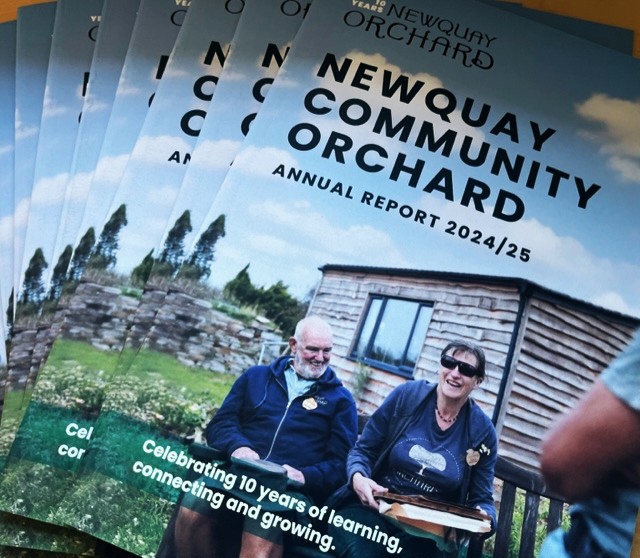
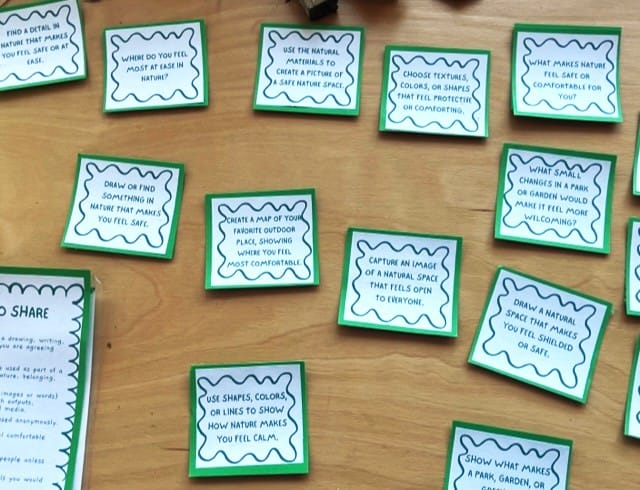
Emma Hill was a primary school teacher then a forest school teacher in Bristol before moving back to Newquay, where she grew up, and started working at Newquay Orchard. “We’ve just finished research around how disabled people feel in integrated horticulture groups,” she says. “We’re interested in what makes nature feel safe and calm and accessible.”
Safe and calm and accessible
That research was based at Newquay Orchard, and they would love to replicate that in other groups. “To take this research and make make something actionable,” says Emma.
The Well Fed Programme is trialling veg boxes on prescription for people with type 2 diabetes and pre-diabetes. Project lead is Clare Judd, who works for Volunteer Cornwall and was at the pop up research cafe with research colleague Mark from the University of Bath.
“Participants get a locally grown veg bag, but importantly they’re also invited to come along to sessions where they can learn what to do with the veg because some of those veg are really unfamiliar. “This started here in Newquay,” explains Clare. “It was a GP who was fed up of prescribing medicines for things that she thought access to better food and other opportunities could help. So she tested giving people a veg box and a little bit of help and found that it worked better than medicines.”
Creating better health
Clare says: “If we can make the case that this is something that should be offered to more people, we’d like to see it offered evenly across Cornwall, and we’d like to see it offered to anyone who could benefit from it in terms of creating better health.”
Julie is a palliative care research nurse at Cornwall Hospice Care.
“We’re always looking at better ways to improve care. That’s where research comes in,” she says. “I work at the hospice. I’m a part-time palliative care research nurse. In my other life, I’m an end-of-life doula. I also care for people at end-of-life in the community, in their own space.”
Walking alongside
“You have birth doulas and death doulas, I think of doulas as being the wise women of the community: they would have seen life in and out in times gone by,” says Julie. “Death and dying has become a bit of a taboo subject for some, but we encourage open conversations and expression. End-of-life doulas work alongside families and communities, in all sorts of ways to support people.”
Julie is also a trainer and an assessor for an organisation called Living Well, Dying Well.
“It’s a citizenship-type course so anybody can access it. It’s really about enabling and empowering people to care for their loved ones at home, if that is appropriate, and demystify some of the things that happen at death. I wear a lot of different hats in this space of death and dying and end-of-life care.”
Julie also works at Cornwall Hospice as a Palliative Care Research Nurse, working alongside the clinical teams to help set up and run studies and research projects answering important questions about how we can continually improve care and quality of life at end of life.
Community journalists
How was Janette and Paul’s outing as a community journalists?
The fluffy microphone was as an issue – it’s fluffs covered up the display. She had to find quiet corners to chat in. There were some great meetings, reconnections and opportunities. She was struck by Emma’s return to her home-town to help create a space where people feel welcome.
“I do feel that I had good conversations. It’s always important to learn something new to see how people communicate and how they work with communities.”