For twenty years, my world was defined by the blue uniform. It represented authority, the law, and a clear line between right and wrong. But as a Police Sergeant in Camborne, I realized that while the uniform commanded respect, it didn’t always build trust.
Introduction: The Postcode Revolution
Chapter 1: The Thin Blue Line on Commercial Street
– A Spark of Determination
– The Posh Hotel and the Radical Truth
– Planting the Seeds of Trust
Chapter 2: The Loitering Crisis and the “Lightbulb” Moment
Chapter 3: When Hip-Hop Met the Handcuffs
Chapter 4: The Night the Music Started
Chapter 5: The Science of the Streets: Decoding C2
Chapter 6: The Weight of the Fight and a New Frontier
Chapter 7: The Battle for the Beat
– The Sacred Rule: Always Free
– The Trials of Charity
– The Golden Thread: A 51% Revolution
Chapter 8: The Quiet Streets of Camborne
– By Us, For Us: The True Alternative
– A Lesson for the Future
– Passing the Torch
This book isn’t just a memoir of a police officer; it’s a story about what happens when you stop looking at a neighbourhood as a “sector to be policed” and start seeing it as a “community to be heard.” We didn’t solve Camborne’s problems by making more arrests. We solved them by giving children an opportunity to dance. It sounds radical, perhaps even a bit mad for a copper, but the results spoke louder than any siren.
Introduction: The Postcode Revolution
I remember standing on Commercial Street in Camborne on a grey Tuesday in 2004. To the outside world, this was a “troubled” area. To the kids living there, it was just home—a home where the doors were often closed and the opportunities felt even tighter.
As the Neighbourhood Team Leader, my job was to “fix” the anti-social behaviour. The flavour of the month was “problem solving policing”. But every time we moved a group of teenagers off a corner, they simply appeared on another one. We were playing a high-stakes game of whack-a-mole, and nobody was winning. The kids were bored, the residents were frustrated, and my officers were burning out.
That was the year I met the “Complexity” of our town. I realized that Camborne wasn’t a puzzle to be solved with a pair of handcuffs; it was a living, breathing system that was out of sync. This book is the account of how we found a new rhythm.
It covers the three pillars that changed my life and, I hope, the lives of many in Cornwall:
- The Shift: Moving from the “Thin Blue Line” to a “Thick Community Web.”
- The Risk: Why a Police Sergeant decided to bet his reputation on a group of “hoodies” and a hip-hop beat.
- The Legacy: How the TR14ers became more than a dance group—they became a blueprint for social change that travelled from the streets of Cornwall to the halls of academia.
I invite you to step behind the yellow tape and see what happens when a community finally decides to say “Yes.”
Chapter 1: The Thin Blue Line on Commercial Street
The rain in Cornwall has a particular way of hanging in the air, a damp, heavy mist that infuses everything with a grey chill. In the early 2000s, walking down Commercial Street or navigating the estates of Camborne on a Friday night, that chill felt like it ran deeper than the weather. It felt like the atmosphere of a town that was losing its grip on its own youth.
When I first took over as the Neighbourhood Team Leader, my head was firmly locked into the traditional policing mindset. I was a Sergeant. I had a radio on my shoulder, handcuffs on my belt, and a statute book full of laws meant to keep the peace. I believed in the system. The equation was simple: you commit a crime, I arrest you, and the streets get safer.
But day after day, shift after shift, the reality on the ground shattered that simple equation. The sheer scale of what we were seeing wasn’t just frustrating; it was profoundly shocking.
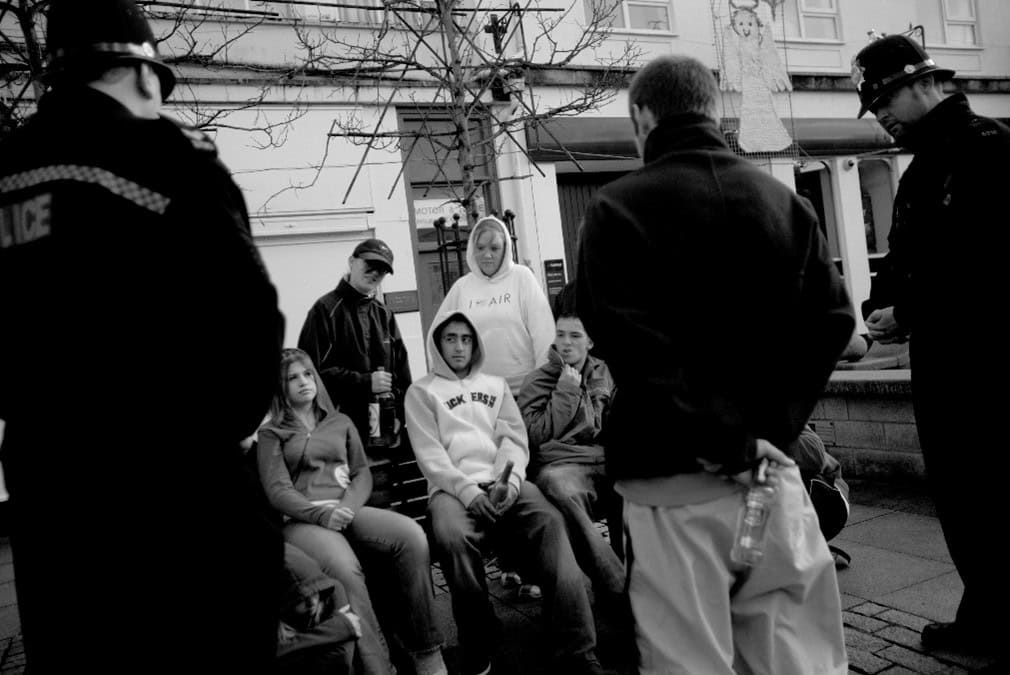
A typical evening didn’t feel like law enforcement; it felt like holding the line against a social collapse. You’d walk into an alleyway and find children—twelve, thirteen years old—completely blind drunk in the street. They weren’t sneaking drinks behind their parents’ backs, either. In a heartbreaking number of cases, it was the parents themselves who had bought the cheap cider and crates of lager, handing them over just to get the kids out of the house.
Because they had nowhere else to go, groups of thirty or forty teenagers would congregate outside the local shops and on street corners. To a frail, elderly resident trying to buy a pint of milk, a wall of shouting, hooded teenagers wasn’t just a minor nuisance—it was terrifying. The intimidation was palpable, turning short walks to the corner shop into gauntlets of fear for the town’s most vulnerable people.
When we intervened, the tension frequently boiled over. These weren’t compliant stop-and-searches. These were standard shifts turning into chaotic altercations. You’d find yourself wrestling on the wet tarmac, restraining children whose limbs were fuelled by adrenaline and cheap alcohol, trying to get cuffs on a teenager while their mates screamed abuse from the shadows.
But amidst the flying fists, the shouting, and the sirens, there was a secondary tragedy that broke through my police armour. If you looked closely at those children—really looked past the aggression and the bravado—you didn’t see hardened criminals.
You saw children who were completely lost.
They were wandering the streets without a map, without a purpose, and without a single positive outlet for the immense energy they carried. They were trapped in a cycle of poverty and boredom, and we were the clean-up crew.
Every night, we played our part in the script. We arrived, the children reacted, the arrests were made, and the paperwork was filed. Yet, the next night, the exact same kids were back on the exact same corners, only angrier, more resentful, and further entrenched in the system.
I remember sitting in the station after a particularly brutal shift, looking at the custody logs. The numbers were up. The arrests were high. By every traditional police metric, my team was doing a stellar job.
But as I looked out the window at the quiet, grey Camborne streets, the truth hit me with the force of a physical blow. The town wasn’t getting any safer. The more people we locked up, the worse the situation became. We were running on a treadmill, treating the bleeding symptoms of a deep, systemic disease, while the disease itself went entirely untouched.
We were trying to enforce our way out of a problem that handcuffs could never fix.
A Spark of Determination
The feeling of helplessness wasn’t entirely new to me. As I stared out at the rain, my mind drifted back to 1983, when I was serving as a young soldier in Belfast, Northern Ireland. I vividly remember standing on a street in the middle of a tense, dark night, watching four-year-old children dancing around the flames of burning cars at two o’clock in the morning egged on by their parents. I remember looking at those tiny figures against the fire, feeling a cold weight in my chest, and thinking: These kids don’t have a chance.
Now, decades later, walking the beat as a patrol sergeant in Camborne and watching local kids getting swept up in anti-social behaviour, vandalism, and constant trouble, that exact same thought echoed in my head: These kids don’t have a chance.
But this time, something shifted inside me. The defeatism faded, replaced by a sudden, quiet spark of determination. I looked at those kids in Camborne, and instead of just despairing for them, a new thought took hold:
Actually, I can give these kids a chance.
That realization changed everything. It transformed me from a police officer just trying to survive the shift into a man on a mission. The very first step of that mission was finding a completely new way to work.
The Posh Hotel and the Radical Truth
The catalyst for that change happened inside the warm, carpeted rooms of a posh hotel. The local authority had organized a high-level meeting, bringing together a room full of senior managers and suits. The grand objective of the day was to “educate” us on the meaning of social deprivation.
As the hours ticked by, the meeting proved to be pretty standard bureaucratic fare – lots of dry statistics, academic jargon, and charts that felt completely detached from the raw reality of the streets I walked. It wasn’t very good, to be frank.
But right in the middle of the dull proceedings, a lady stood up in the crowd. She looked around the room of comfortable managers and spoke with a sharp, undeniable conviction:
“You can’t understand deprivation unless you’ve lived it or crossed people’s thresholds into it.”
Her words cut through the bureaucratic fog like a foghorn. It was the truest thing said all day. Without thinking twice, I stood right up in my uniform and called out across the room, “I agree with that lady.”
When we broke for lunch, the room scattered. When we reconvened for the afternoon session, the organizers announced a change of pace: we were told we could choose exactly who we wanted to sit with. I didn’t want to talk to the bureaucrats or the managers. I scanned the room, found the lady who had spoken up, and walked straight over to her table.
As it turned out, no one else chose to sit with us. We were left entirely to ourselves in our own little corner of the room. That lady turned out to be Hazel Stutely OBE.
Sitting at that table, we didn’t waste time on small talk. I opened up to her about how much my neighbourhood policing team was struggling in Camborne. I told her about the cycle of arrests, the angry kids, and the feeling that we were just spinning our wheels. Hazel listened, and then she began to explain her Connecting Communities (C2) project. She talked to me about Complexity Science — the idea that a neighbourhood is a living, breathing system, and that if you want to fix crime, you must learn how to truly connect with young people and the wider community from the inside out.
It was exactly what I had been searching for. By the time the conference ended, a plan was in motion. We managed to secure the funding, and I marched my entire police team through Hazel’s course.
Planting the Seeds of Trust
The system’s answer to this crisis of anti-social behaviour was a modern piece of legislation called the ASBO – the Anti-Social Behaviour Order. It was designed to act as a deterrent, a legal boundary keeping troublesome kids away from specific streets or groups of people. The local authority anti-social behaviour team treated them like trophies of successful enforcement. They actually measured their success by the number of ASBOs issued and we were supplying the evidence for them.
What happened next was a quiet revolution, made possible by a fantastic neighborhood team. My squad comprised several traditional police officers alongside a newly appointed cadre of Police Community Support Officers (PCSOs). These PCSOs were our secret weapon. Most of them had deep, lifelong roots in Camborne, giving us unprecedented, organic access to the community. They could walk into spaces where a standard uniform would cause a room to go silent.
Because of them, we were able to gather an immense amount of community intelligence, not by knocking on doors with search warrants, but by rolling up our sleeves and getting stuck into local projects.
One of our proudest early victories involved an old, rat-infested rubbish dump sitting right on the boundary of a local housing estate. It was an eyesore, a hazard, and a magnet for trouble. Working alongside the residents, my team helped transform that dump into a clean, safe playing field for the neighbourhood’s kids. It was symbolic of the shift we were making: we were quite literally clearing away the rot to make room for something better.
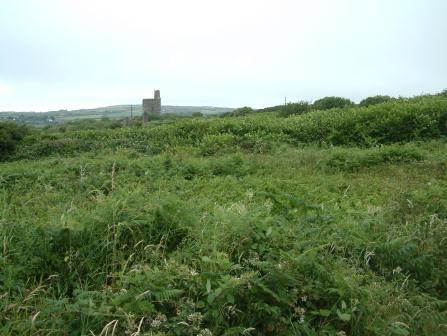
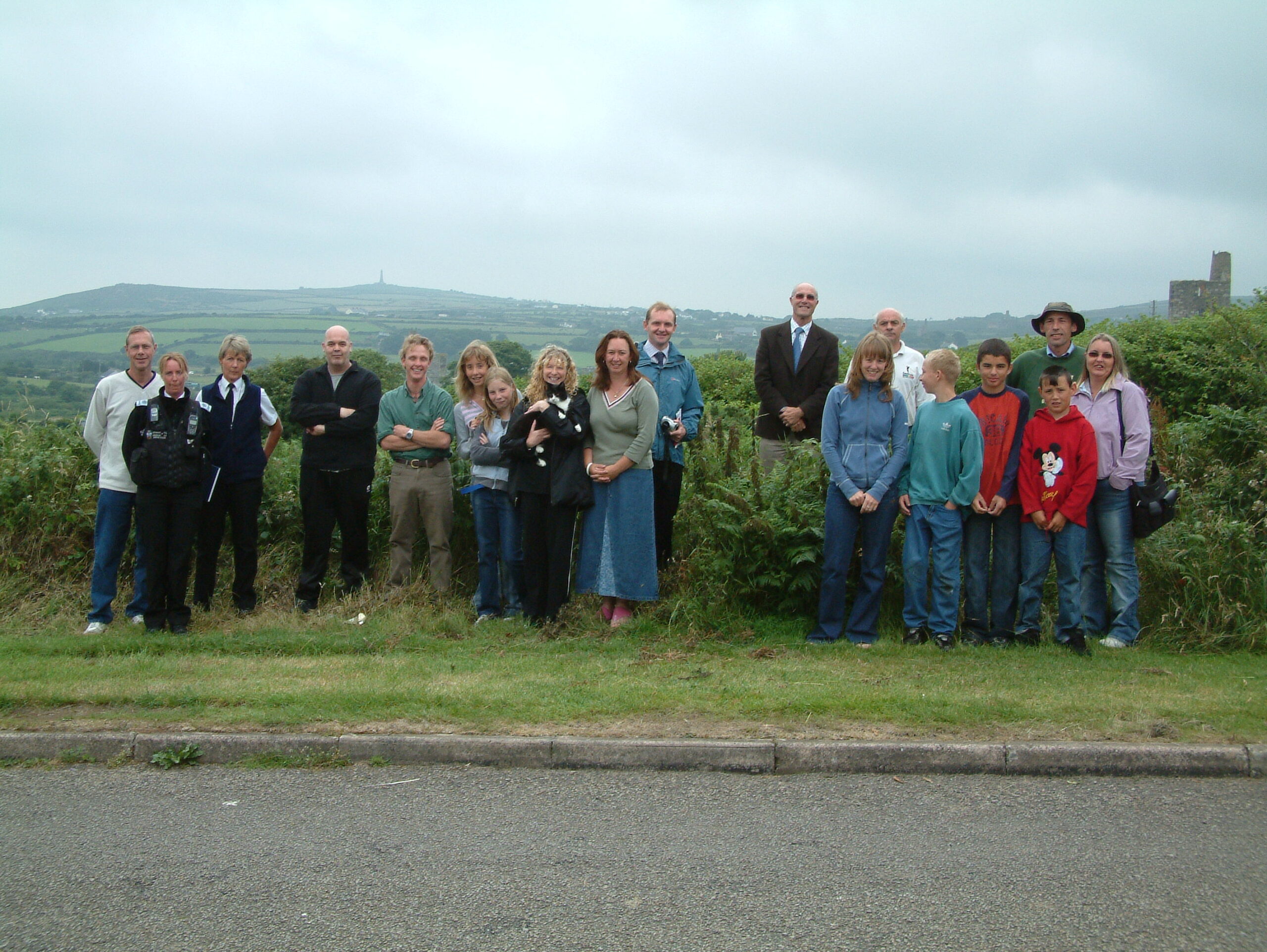

The dynamic of our team was perfectly balanced. The PCSOs were the key to connection, building bridges and listening to the community, while my police officers stood ready to take firm enforcement action whenever it was necessary.
It’s vital to understand that we hadn’t gone soft. The law was still the law, and we could—and did—clamp down when lines were crossed. But a fascinating thing happened: as our community presence grew, we found we needed to take enforcement action less and less.
The proof was undeniable. At one point, the town of Camborne had absolutely zero Anti-Social Behaviour Orders (ASBOs) or dispersal orders in place. Not a single one. Meanwhile, our neighbouring town of Redruth—which shared the exact same police inspector, the exact same district council partners, and the exact same socio-economic challenges—was drowning in them, with a load of orders active just a few miles down the road.
We had managed to systematically crush anti-social behaviour and stabilize the local school ecosystem before the dance work ever began. When the music finally started a year later, it wasn’t some wild, random, spur-of-the-moment stunt. It was the natural, organic progression of a relationship we had spent months carefully building on the ground. We had already cultivated the soil; we were just waiting for the right rhythm to make it grow.
Chapter 2: The Loitering Crisis and the “Lightbulb” Moment
There is a distinct difference between seeing something every day and finally understanding it. For months, I had looked at the youth of Camborne through the lens of a police officer’s windscreen. I saw them as statistics, as hazards, as potential targets for our next dispersal order. But by the time 2005 rolled around, the friction between the police and the town’s youth had reached a boiling point. The TR14 postcode was regularly featured in the local press, painted with the broad brush of “social deprivation” and “anti-social behaviour.”
But out on the pavement, the reality was entirely different. I started to notice that for these children, getting an ASBO wasn’t a deterrent at all. It was a badge of honour. It was a certificate from the state confirming that they were as tough, dangerous, and anti-social as they claimed to be. We were handing out these orders like confetti, yet all we were doing was validating their rebellion and pushing them further to the margins.
The turning point—my true “lightbulb” moment—came on a particularly ordinary, overcast evening. I was out on foot patrol, walking past the granite recesses of the town centre. On one of the main corners, a massive group of teenagers had gathered. There must have been thirty or forty of them, clad in the standard uniform of the era: oversized tracksuits and pulled-down hoodies.
As I approached, the usual defensive mechanisms clicked into gear on both sides. My hand instinctively hovered near my utility belt. The kids immediately stiffened, their voices dropping into low, defensive murmurs, their eyes locking onto my uniform with pure hostility. The air was thick with the predictable “us versus them” tension that had defined my entire career in Camborne.
I stopped a few yards away, preparing to deliver the standard, weary lecture about moving along. But as I looked across the circle of faces, I hesitated.
For the first time, I forced myself to really look at them. I mean really look at them.
I looked past the aggressive posture. I looked past the intimidating wall of hooded sweatshirts. And what I saw surprised me. They weren’t plotting a riot. They weren’t vandalizing property or dealing drugs. They were just… standing there. Some were kicking a deflated football against a curb. Others were leaning against a brick wall, shivering slightly in the damp Cornish air, talking about nothing in particular.
It hit me with the sudden, sharp clarity of a siren: They aren’t inherently bad. They are just visible.
In a town like Camborne at that time, if you were a teenager, you were caught in a trap. If you stayed at home in a cramped, stressful environment, you were in the way. If you went to the local parks, there was no lighting. So, you went where the streetlamps were. You went where your friends were. You went to the town centre because it was the only place with a bit of light and life. But because thirty teenagers standing under a streetlight looks intimidating, the police were called, and the cycle started all over again.
They weren’t gathering to cause trouble; they were gathering because they had nowhere else to go.
Standing there on the tarmac, I realized that as a Police Sergeant, I had spent years asking the entirely wrong question. The police force, the council, the local papers—we were all asking, “How do we stop these kids? How do we disperse them? How do we lock them up?”
I decided, right then and there, to change the question. I looked at the group, took a breath, and internally asked: “What do these kids actually want to do? What do they need?”
If we wanted to eliminate anti-social behaviour, we couldn’t just create a vacuum by telling them where they couldn’t be. We had to provide a space where they could be. We needed to replace the negative, destructive energy with something positive, creative, and entirely theirs.
I didn’t have the answer yet. I didn’t know how a forty-odd-year-old Police Sergeant was going to bridge that massive chasm of distrust. But as I walked away from that street corner without making a single arrest or issuing a single warning, I knew the rulebook was officially out the window. It was time to find a radical “Yes.”
Chapter 3: When Hip-Hop Met the Handcuffs
Great ideas rarely arrive during formal committee meetings or over boardroom tables. They don’t spring from official police strategy documents or council white papers. More often than not, the ideas that truly change the world are born in the unlikeliest of places—forged in the warmth of a local village pub, over a couple of pints, when two people from completely different worlds suddenly realize they are speaking the exact same language.
That is how I met Danny Price.
Danny was down in Cornwall on holiday, trying to escape the pressures of his own life for a bit. We struck up a conversation across the bar, the kind of casual chat between strangers that usually ends with a nod and a goodbye. But as the evening wore on—and if I’m being completely honest, fuelled by a little bit too much alcohol—our conversation deepened.
Danny started talking about his hometown of Oldham, up in Greater Manchester, describing the heavy social friction, the lack of opportunities, and the bubbling tension among the youth on the streets there. I listened, and then I started describing exactly what I was seeing every single night on Commercial Street in Camborne.
As we talked, a strange realization settled over our drinks: we were describing the exact same town. The geography was different, the accents were miles apart, but the systemic disease—the lethal combination of poverty, crushing boredom, and a total lack of belonging—was identical.
Right there, amid the background clink of glasses, the idea hit us. Why don’t we set up free dance workshops in Camborne? Why don’t we give these kids a completely raw, creative outlet to burn off that explosive energy?
On paper, it was a laughable partnership. In fact, it was highly unlikely that a guy like Danny would ever be sitting down and having a heart-to-heart with a police officer, let alone proposing a joint venture. Danny came from a completely different world than I did. He lived and breathed dance, youth culture, and the arts; I wore a crisp blue uniform, carried handcuffs, and represented the very establishment that kids like the ones in Oldham and Camborne actively distrusted. We were an absolute mismatch—the copper and the choreographer.
But beneath the surface differences, we shared something vital: we both saw the human beings behind the labels. We both believed that if you give a young person a high-quality “yes,” they will stop looking for low-quality “nos.”
When Danny agreed to come down to Camborne to put this wild theory to the test, I knew the real battle was just beginning. It wasn’t an easy partnership to form at first, and trying to sell this idea inside the police station was an uphill climb. To some of my fellow officers, this was “clown policing” at its finest. They thought I’d completely lost my senses, rewarding anti-social behaviour by giving troublesome kids a stage instead of a cell.
But then, the doors opened, and Danny stepped into the room.
I will never forget watching him work with those kids for the first time. The atmosphere in that initial workshop was thick with suspicion and teenage bravado. The kids arrived with their guards up, shoulders hunched, waiting for another authority figure to lecture them.
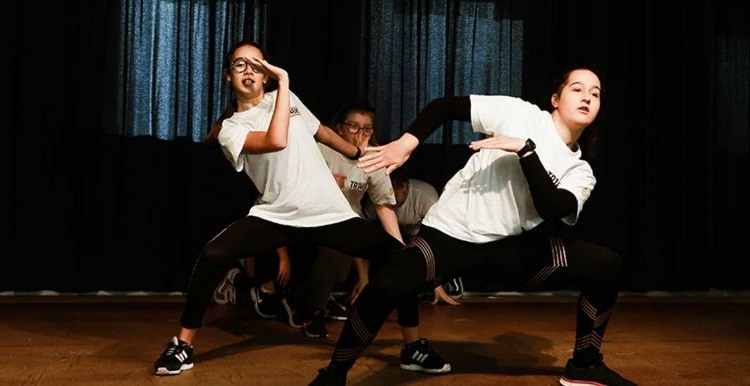
Then Danny moved. He set that dance hall absolutely alight with his sheer charisma. He didn’t talk down to them; he didn’t preach. He met them at their level and spoke through a medium that required zero explanation: the beat.
Danny had this incredible, rare ability to not just teach kids how to move, but to truly listen to them. When a thirteen-year-old in a tracksuit stepped forward and tentatively suggested a different hip-hop step or a change to the routine, Danny didn’t shut them down. He listened, he validated it, and he incorporated it.
For the first time in their lives, these kids weren’t being told to move along. They weren’t being told they were a nuisance. They were being told that their ideas had value, that their energy was beautiful, and that they were a crucial part of a team.
The copper had provided the platform, but the choreographer provided the spark. And as the music started to echo through the walls of that hall, I watched the walls between the police and the youth of Camborne begin to crumble.
Chapter 4: The Night the Music Started
Before we could ever reach a stage, we had to survive the street. On that very first day, Danny and I walked through the centre of Camborne toward the Corn Exchange, where we had booked our first session. It was an image that practically stopped the town in its tracks. There I was, marching along in my sharp, full-brimmed police Sergeant’s uniform. Right beside me was Danny—a black man rocking dark sunglasses, looking every bit the urban choreographer, miles away from the usual faces you saw in West Cornwall in 2005.
As we navigated the pavement, an elderly lady passed us, took a long, bewildered look at Danny, and then turned to another local nearby. In a loud, entirely serious whisper, she said, “There’s a Black man over there, but look—the copper’s got ‘im.”
Danny and I burst out laughing. It was hilarious, but it was also incredibly telling. To the old guard of Camborne, the only logical reason a police officer would be walking side-by-side with someone who looked like Danny was because an arrest had been made. The concept of partnership, of bringing something entirely new and culturally vibrant into our world, hadn’t even registered yet.
But if the adults were confused, the children were ready.
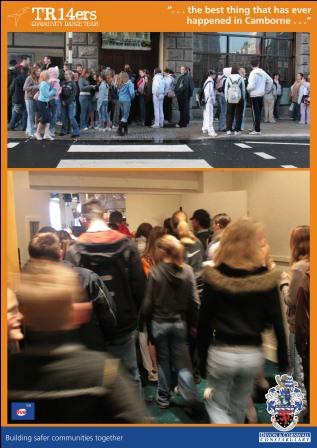
When we finally turned the corner and reached the Corn Exchange, my jaw hit the floor. There were queues of children stretched right down the street, buzzing with an energy I hadn’t felt in this town for years.

It hadn’t happened by accident. Two or three days prior, Danny had hit the pavement like a one-man promotional whirlwind. He didn’t hand out dry, official council leaflets; he went straight onto the estates and the street corners where the kids loitered. He’d bust out a few explosive hip-hop moves right there on the concrete, stop, look the kids in the eye, and say, “You want to learn how to do this? Why don’t you come with us?”
To back him up, Camborne Secondary School did something unprecedented: they put our bright flyers directly into every single class register, ensuring that every child in the building saw it.
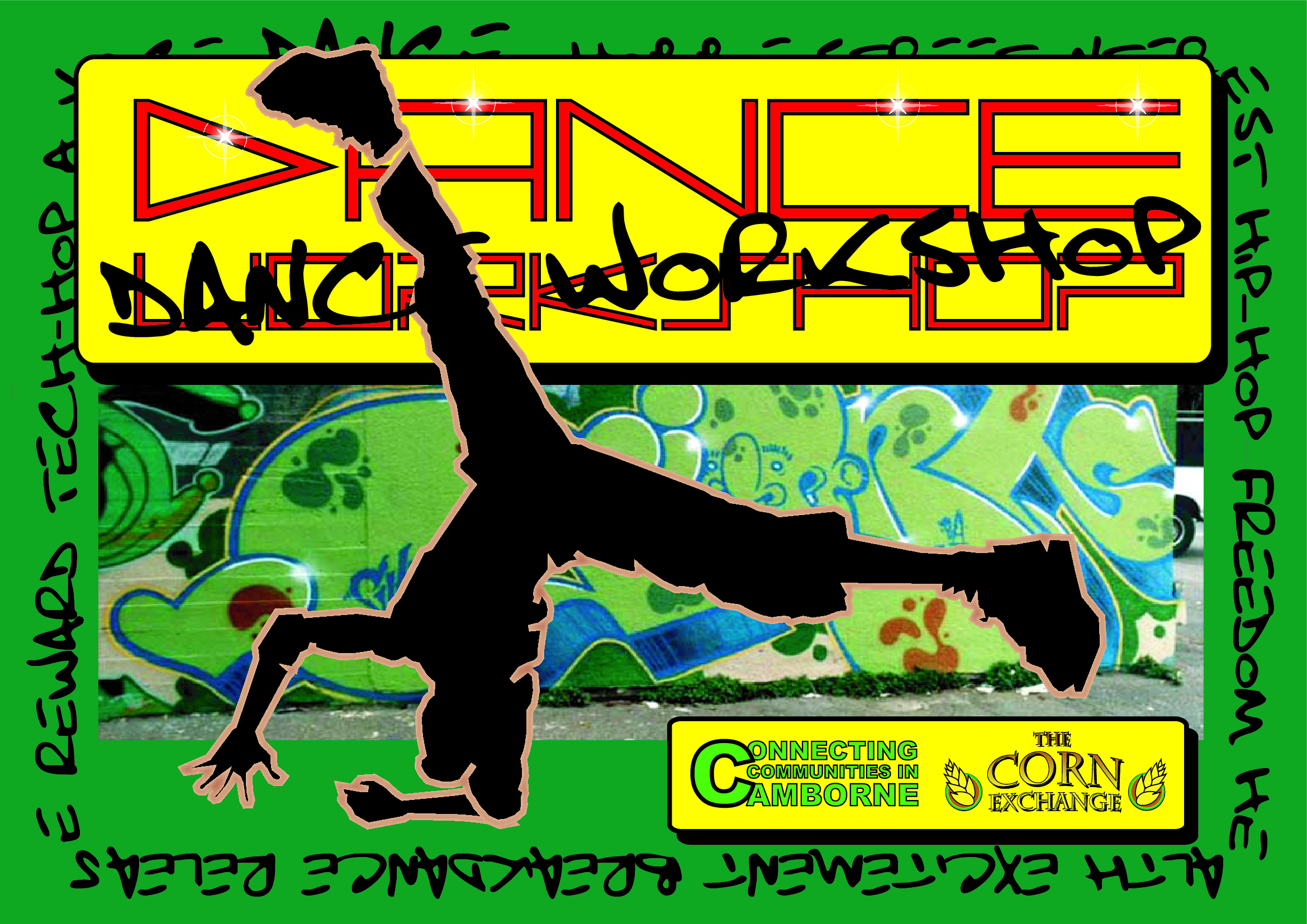
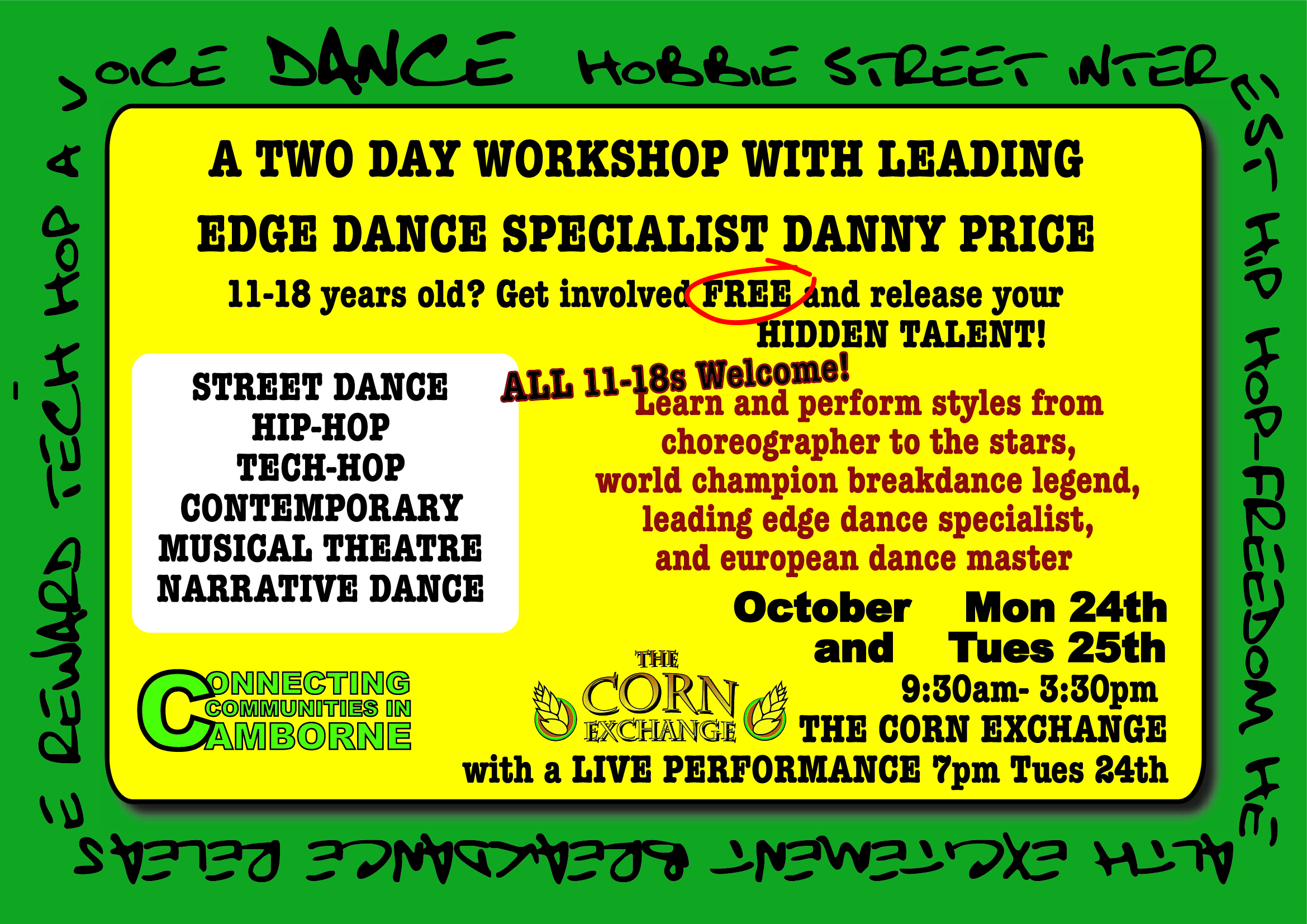
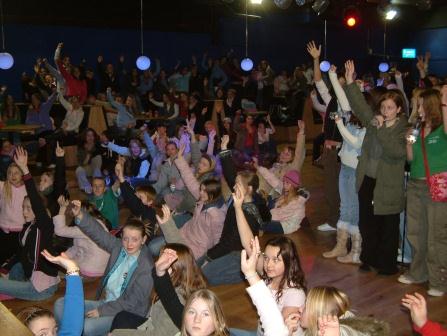
When we unlocked the doors of the Corn Exchange that afternoon, a couple of hundred children poured into the hall. It was absolutely incredible. The space was packed out, a sea of tracksuits, wide eyes, and nervous excitement.
Inside the hall, the air smelled of new timber, floor wax, and the sudden, electric realization that something massive was shifting. I stood at the back of the room in my heavy tunic, feeling the weight of my radio, but for the first time, I wasn’t there to disperse a crowd. I was there to protect a space they could finally call their own.
Danny stepped to the centre of the floor, the bass dropped from the speakers, and the floorboards of the Corn Exchange began to shake. The kids watched him, memorized. Within minutes, the barriers were down. They weren’t “the hoodies on the corner” anymore; they were a collective, moving to the same beat.
That first day changed the narrative of the TR14 postcode forever. We had proven that the youth of Camborne didn’t want to cause trouble—they were just waiting for someone to give them something spectacular to say “Yes” to.
Chapter 5: The Science of the Streets: Decoding C2
That first afternoon inside the Corn Exchange was a masterclass in raw, magnetic control. Danny had the children completely under his spell. He held that room of two hundred teenagers with nothing but his voice, his movement, and his absolute refusal to judge them. The energy was electric. But while the music boomed and the kids danced, the old world we were trying to escape was still waiting just outside the double doors.
As I walked around the perimeter of the hall, keeping an eye on things, I noticed a sudden commotion near the exit. A local woman—whom I would get to know very well over the coming years—was dragging her young daughter toward the door by her arm. The girl was resisting, her eyes glued to the dance floor, desperate to stay.
I stepped in, adjusting my stance so as not to look threatening, and asked, “Excuse me, is everything alright? What’s wrong?”
The mother stopped, looking at my uniform with deep-seated frustration and fear. “It’s always the same,” she said, her voice heavy with the exhaustion of living in an overlooked town. “Anything good that happens in Camborne, the police always turn up because everything goes bad. I’m not having her in there. It’s too dangerous.”
It was a heartbreaking realization. To this mother, our uniforms didn’t represent safety; it was a flashing neon sign that trouble was imminent. In her mind, if coppers were standing in the room, it meant the environment was volatile, dangerous, and unsafe for her child. The system had trained the community to expect failure.
I looked at her, smiled gently, and said, “Actually, it’s the police who are running this. We set it up.”
You could see the visible shock wash over her face. The cognitive dissonance of police officers organizing a hip-hop workshop took a second to register. She looked at me, looked back at Danny leading the massive crowd of kids, and slowly let go of her daughter’s arm. With a nod, she allowed her to run back onto the floor.
That little girl didn’t just finish the session that day. She stayed with us. Over the years, I watched her transform from a hesitant kid being dragged out of a hall into a confident, fiercely talented dance leader. She eventually went on to perform on national stages, representing the TR14ers and showing the entire country what the youth of Camborne were truly capable of when given a chance.
Seeing the room explode with life that first day didn’t just stun the sceptics—it surprised me, too. As a police officer, you are trained to brace for impact, to expect the wheels to fall off. But watching these kids lock in, completely captivated by the rhythm, I knew we had captured lightning in a bottle.
I stepped out of the noise of the hall, pulled out my phone with trembling hands, and dialled Hazel Stuteley.
Hazel was the visionary lead from the Health Complexity Group. She and her team had spent hours training my neighbourhood policing team in the principles of Connecting Communities (C2). They were the ones who had first opened my eyes to the idea that policing and public health were two sides of the same coin.
When she answered, I could barely contain myself. “Hazel,” I said, my voice crackling with excitement. “You’ve got to get down here. You’ve got to come and look at this. It is absolutely fabulous.”
She heard the urgency in my voice, and she didn’t hesitate. She arrived at the Corn Exchange accompanied by doctors, researchers, and health professionals from the group. They walked into a two-day session we had set up, stepping out of the sterile world of clinics and surgeries and right into the loud, chaotic, beautiful reality of a youth hip-hop workshop.
They stood at the back of the hall, and they were completely staggered.
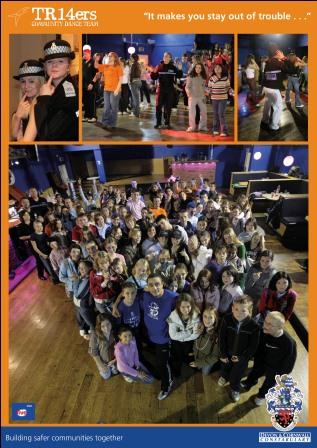
These were medical professionals who spent their lives trying to figure out how to get vulnerable, marginalized people to engage with health services. Yet right in front of them, the impossible was happening.
The doctors couldn’t believe the sheer scale of the health benefits unfolding in real-time. It wasn’t just about the physical exercise of the dance—though that alone was massive for kids living in deprivation. It was the social health.
Children who had been completely isolated, trapped in stressful households or hiding behind defensive walls on street corners, were suddenly socializing, laughing, and working in tight-knit teams. More than that, because the health team was there in the room with us, breaking down barriers alongside the police, these kids were suddenly accessing health advice and social support naturally, without fear or stigma.
Even now, sitting down to write these words all these years later, the memory brings tears to my eyes.
It brings tears because we had spent so long being told that these kids were a lost cause. We had been told that the only way to deal with the TR14 postcode was with a heavy hand, a flashing blue light, and a police cell.
But standing there next to Hazel and those doctors, watching the sweat pour off those smiling, exhausted children as the music echoed through the rafters, I knew we had rewritten the future of Camborne. We hadn’t just stopped anti-social behaviour. Together, we had started a movement of hope.
Chapter 6: The Weight of the Fight and a New Frontier
Our work in the schools was yielding results so massive that it caught the attention of the national press. The Times Educational Supplement (TES) ran a feature on what we were achieving in Camborne, reporting that our presence was having a monumental effect on the local secondary school. By working directly with the kids, listening to them read, and tackling truancy as a team, we had drastically reduced school absences, significantly cut down on reportable behavioural incidents, and driven overall attendance way up.
The BBC Two daily politics show ran a feature on the dance workshops asking why it was almost impossible to get funding for initiatives like this.
Shanna Dawes, one of those 13 year olds drinking in the street, gave an incredible TED Talk in Exeter entitled The Power of Dance.
Success on the streets doesn’t automatically translate to victory in the corridors of power. While the Corn Exchange was vibrating with music, energy, and breakthroughs that were making health professionals weep, a much darker storm was gathering over my own head.
The tragic irony of pioneering a radical idea inside a rigid, bureaucratic institution like the police force in partnership with the local authority is that you spend 10% of your energy doing the good work, and 90% of your energy defending it.
Day after day, I found myself locked in an exhausting, uphill battle. I was constantly hauling myself into offices, having to justify my methods to senior police officers and local authority bureaucrats who couldn’t see past the traditional rulebook. To them, I was still the rogue neighbourhood beat sergeant who had “gone native”, wasting valuable police hours running a “play group”. They wanted statistics they could understand—arrests, stop-and-searches, enforcement orders. They couldn’t see the reduction in these statistics as success, only inefficiency. They couldn’t quantify hope, and they certainly couldn’t file a hip-hop routine into a standard police database.
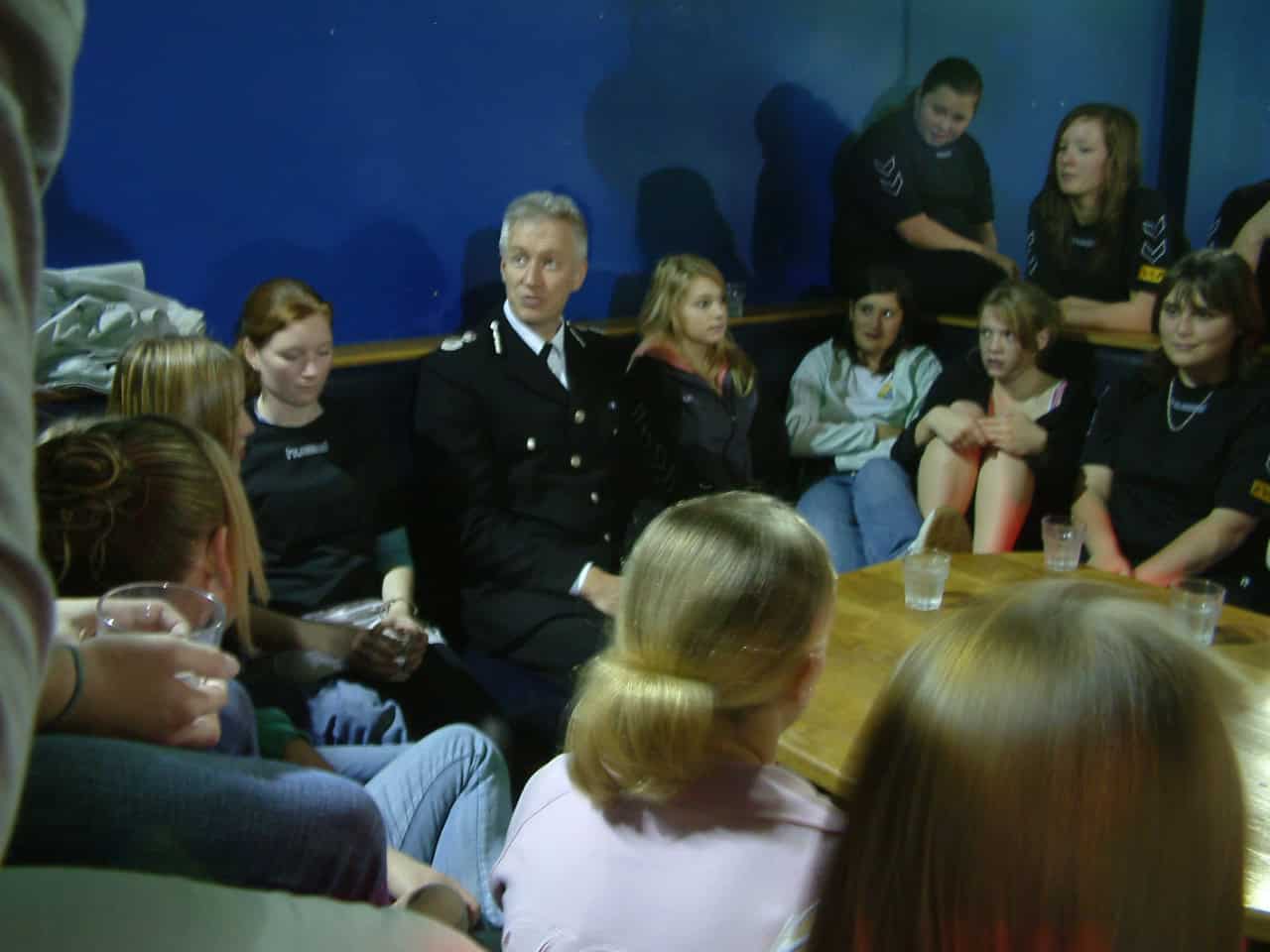
There were some notable exceptions. Chief Constable Steve Otter came to meet the children in their dance workshop.
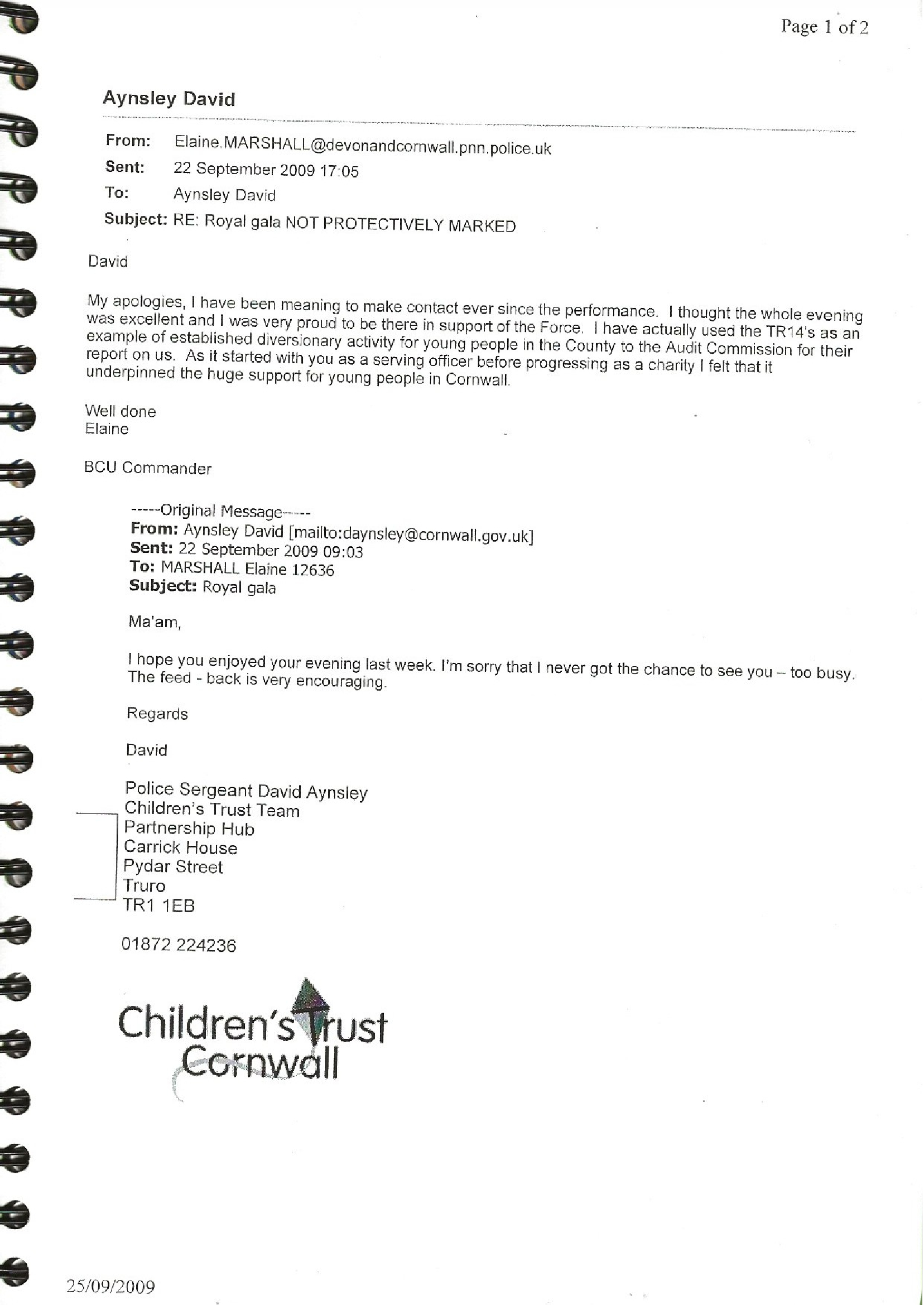
A Superintendent, my BCU Commander, came to our Royal Gala performance in the Hall for Cornwall and used the TR14ers as evidence for her submission to the audit commission.
However, my local inspector or our partners in the local authority anti-social behaviour team did not visit us once. Not once.
The pressure was relentless. It was a grinding, unyielding friction, and eventually, the human machine broke. The stress of constantly fighting the very system I wore the uniform for caught up with me, and I became seriously ill. I was forced off work sick, sitting at home, feeling the heavy weight of a bureaucracy that seemed determined to crush the best thing we had ever built.
But sometimes, the right leader appears at exactly the right moment.
When I finally returned to work, I was moved into a new role: Police Youth Issues Manager for the entire county of Cornwall. I owed that appointment to a boss who truly knew what he was doing. He saw the value in what had happened in Camborne, he recognized the toll the fight had taken on me, and he handed me a strategic platform to take my philosophy county-wide.
My first instinct, naturally, was to try and duplicate the magic of TR14. I wanted a dance project in every major town in Cornwall. But I quickly ran into a brick wall of profound apathy. People simply weren’t interested. Other police teams across the county looked at Camborne as a freak anomaly, a one-off stunt. They didn’t believe the data, and they didn’t want to step out of their patrol cars to engage with kids. There was one notable exception—a team down in Liskeard who saw the vision and did similar work—but scaling a radical grassroots movement through top-down policing proved nearly impossible.
If I couldn’t export the dance, I realized I had to export the philosophy. I had to change the system itself.
As I settled into the Youth Issues Manager role, I began working closely with the Youth Offending Team (YOT). One afternoon, during a candid conversation, they threw a statistic at me that made my blood run cold. They pointed out that a massive, overwhelming number of children sitting in the youth justice system should never have been there in the first place.
“David,” they told me, “By the time these kids are processed through the police system and dropped onto our desks, the damage is already done. We look at their files and realize the whole thing could have been handled with a bit of common sense, but they’ve already been chewed up by the criminal justice machine.”
It was the “whack-a-mole” problem all over again, just operating on a grander, county-wide scale. A kid would commit a minor, stupid infraction born of boredom or peer pressure. A traditional officer would arrest them, a criminal record would begin, and suddenly that child was labelled, resentful, and locked onto a track that led straight to a life of crime.
The solution hit me: we had to intercept them at the very first point of contact. We needed to stop the conveyor belt before it entered the courtroom. And the tool to do that was Restorative Justice.
Restorative justice strips away the cold, impersonal bureaucracy of the court and forces the young person to face the human reality of what they’ve done. It’s about repair, accountability, and dialogue, rather than just blind punishment. I realized that if we offered restorative justice at every single interaction between the police and a young person across Cornwall, we could save an entire generation from the system.
I had a team of youth issues officers stationed right across the county. They were good people, but they needed a weapon to fight the status quo. They were all trained in Restorative Justice but the system was that Inspectors who may or may not have been were delivering the Final Warnings and escalating the children to the YOT.
Then came the bureaucratic manoeuvring. Using every bit of political capital, leverage, and sly manipulation I could muster, I managed to wangle the formal authority from the powers-that-be for my team to take total control. From that moment on, every single criminal justice interaction between the police and a young person in Cornwall had to go through my youth issues managers first. We became the gatekeepers.
The impact was immediate, dramatic, and frankly, hilarious.
Within just three months, the local youth courts were up in arms. They actually issued a formal complaint to the police force, grumbling that they had employed more court staff and we weren’t sending enough young people to court anymore. The magistrates were sitting in empty courtrooms, scratching their heads, wondering where all the “criminals” had gone.
Meanwhile, over at the Youth Offending Team, the mood was ecstatic. For years, they had been completely drowned in a tidal wave of petty, minor cases that didn’t belong on their desks. Because we had choked off that unnecessary pipeline at the source, their workload plummeted. For the first time in their careers, they had the breathing room and resources to concentrate 100% of their expertise on the very small, high-risk group of young people who genuinely, deeply needed their intensive help.
We hadn’t just changed the rhythm of a single town this time. By using the lessons of TR14, we had completely rewritten the rules of justice for the children of Cornwall.
Chapter 7: The Battle for the Beat
Every police officer knows that when you are on sick leave, the rumour mill at the station doesn’t stop. But while I was off recovering from the physical and mental toll of the stress, the bureaucracy wasn’t just gossiping—it was actively drafting a death warrant for the TR14ers.
The brass had decided that my illness was the perfect opportunity to implement what they coldly called an “exit strategy”. In the sterile language of risk assessments and management meetings, they decided the police had to cut ties. I was formally instructed that I had to stop doing the TR14ers.
They wanted me to walk away. They wanted me to leave those hundreds of kids back on the street corners, to tell them that the music was over and the “tough-on-crime” status quo had won.
When I returned to work, still feeling the fragile edges of my recovery, I looked at those instructions, and then I looked at the kids. I made a quiet, non-negotiable decision: I wasn’t going to abandon them. If the force wanted an exit strategy, they would have to find someone else to execute it. I was going to carry on doing it myself, uniform or no uniform, because my duty to those children ran deeper than any bureaucratic directive.
As if the universe knew we needed a shield, a powerful ally stepped into the ring just as the pressure was mounting.
Lady Mary Holborow, the Lord Lieutenant of Cornwall, had been quietly watching our work. She was a remarkable woman who possessed a deep, genuine love for the county and its people. Recognizing the immense value of what we were doing, she bypassed the local red tape and went straight to the top. Through her instrumental support, we secured a Royal Patron: Her Royal Highness the Duchess of Gloucester.
You cannot underestimate what that did for us. Overnight, a project that local bureaucrats had dismissed as a “clown show” was suddenly under royal patronage. It gave us an impenetrable shield of legitimacy. Every time a senior officer tried to shut us down, they had to reckon with the fact that they were trying to kill off a charity backed by the Royal Family. That royal nod didn’t just protect us; it lit a fresh fire under me to keep fighting.
Seeing that they couldn’t kill the project, the police authority tried to do the next best thing: hijack it.
While I was still away sick, they sent representatives to the local nightclub we had been using for our free workshops. They wanted to take over the lease, run the sessions themselves, and sanitize the whole operation. But they underestimated the loyalty of the community we had built.
The nightclub owner looked at the suits from the police authority, flatly refused to sign anything, and said, “I don’t know who you are. I only deal with Dave Aynsley. When he gets back from sick leave, we’ll talk. Until then, get out.”
The authority retreated with their tails between their legs. The sheer loyalty of a nightclub owner had saved the TR14ers from being absorbed into a sterile police PR exercise.
The Sacred Rule: Always Free
Knowing we couldn’t rely on the police forever, we made the leap to become an independent registered charity. As we drew up our foundational principles, there was one rule I made absolutely sacred, non-negotiable, and set in stone: Entry to the TR14ers had to be completely free.
At first, this was a purely practical decision. The children we were reaching clearly didn’t come from households with spare cash. If we charged even fifty pence, we knew we would be locking out the very kids who needed us most.
But as the years rolled on, we discovered a beautiful, psychological side effect of this rule. Because there was no barrier to entry, no transaction at the door, and no ticket required, the children took total ownership of the project. They didn’t feel like “customers” attending a service; they felt like it was theirs. They were just walking into their own space, on their own terms. That simple, free door policy transformed their relationship with us. It wasn’t a club they were allowed to visit; it was a home they owned.
Over the last 21 years, I have had to fight tooth and nail to defend this rule. Well-meaning advisers, corporate trustees, and bean-counters have repeatedly tried to persuade me to charge a small entry fee. “Just a pound a week, David, to help cover costs.”
But I resisted every single attempt. I knew that the moment money changed hands, it would completely destroy the unique, egalitarian dynamic of the TR14ers. It would draw a line between those who could pay and those who couldn’t, turning a family into a business. So, for over two decades, through every financial storm we weathered, we stayed free. And we always will.
The Trials of Charity
Becoming a registered charity was a massive milestone, but it introduced us to a whole new world of administrative headaches. Suddenly, we had to have a formal board of trustees—outside people with “professional” backgrounds who were supposed to help us run things.
It didn’t take long for the corporate mindset to clash with our grassroots soul. Some of these new trustees didn’t understand the chemistry of what made the TR14ers work. They saw a police sergeant who was too close to the project and too protective of the kids. After a period of intense internal politics, they staged a coup. I was pushed out.
I spent a year on the outside, watching the project I had poured my life-blood into drift. But a year later, the phone rang. The very board that had ousted me realized they couldn’t run it without the trust of the community. They asked me to come back.
When I stepped back through the doors, I found a completely different organization. We now had paid employees. Unfortunately, with rapid growth came a lack of oversight. I soon discovered that one of our employees had been systematically stealing from the charity.
It was a devastating betrayal. This wasn’t just money; it was funding meant for the children of Camborne. As a copper, I knew exactly what had to be done. We brought in the police, she was prosecuted, and she was eventually convicted.
The fallout from the scandal was immense. Panic swept through the boardroom, and a mass exodus of trustees followed. In the vacuum, a new group of trustees arrived. They brought with them a slick, modern proposal: we should abandon our charity status and convert the TR14ers into a CIC—a Community Interest Company.
They painted a beautiful picture of efficiency and modern structure. But my copper’s radar was pinging. I scheduled a private chat with our accountant and asked her straight: “What is the actual, practical difference if we change to a CIC?”
The accountant looked at me and said, “Well, David, the primary difference is that under a CIC structure, the trustees can be paid a salary.”
There it was. The ugly head of self-interest, disguised as modern management. They wanted to turn our beautiful, selfless community asset into a vehicle to pay themselves.
But years earlier, when we had first drafted the articles of association to become a charity, I had insisted on a very specific, stubborn clause: The founder retains the absolute right to veto any structural changes to the organization.
I sat down in the next board meeting, listened to their pitch to convert to a CIC, and calmly said: “No. I am exercising my founder’s veto. We remain a charity.”
The room went dead silent. Realizing their plan had been completely derailed by a clause I’d written with legal advice years ago, those trustees resigned shortly after. We had survived another attempt to tear the heart out of the TR14ers.
The Golden Thread: A 51% Revolution
Through all the drama, the scandals, and the betrayals, we kept the music playing. And slowly, the right people began to find us.
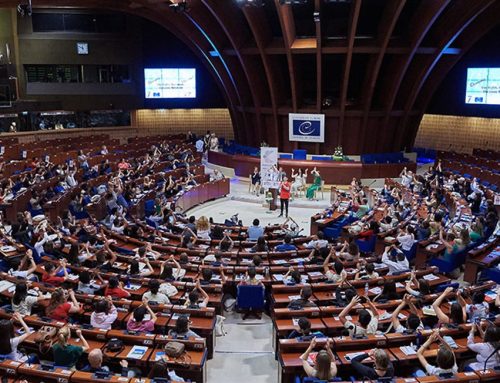
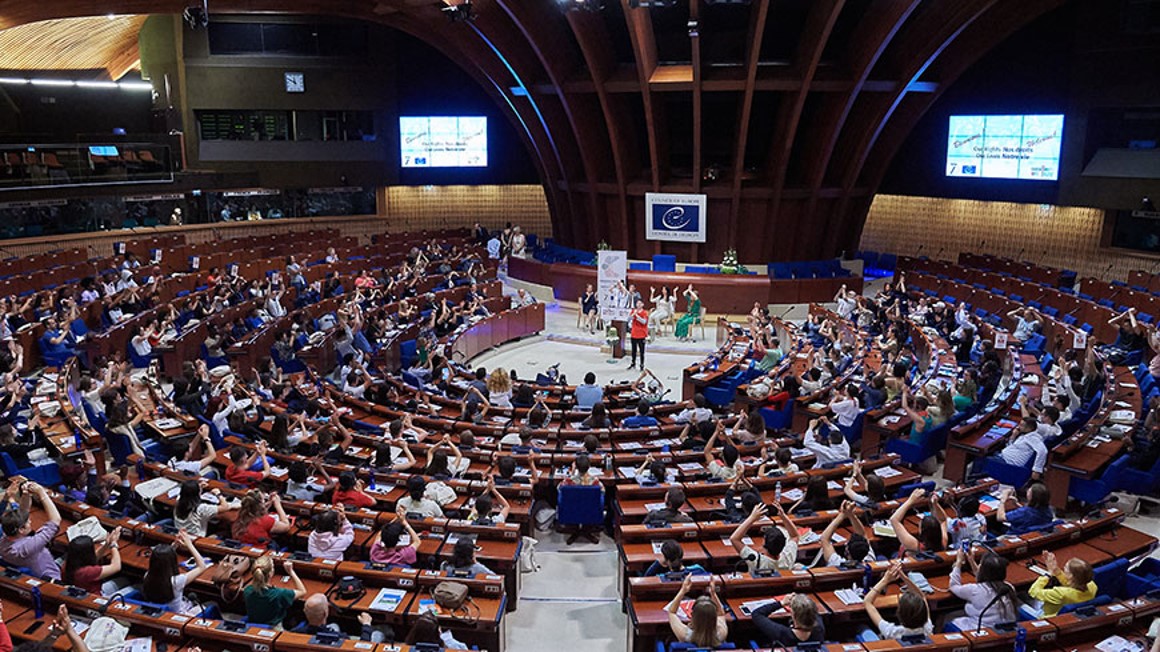
I was invited to speak at the Council of Europe in Strasbourg to present our model of youth engagement. Needing someone to accompany me, I reached out to a man named Richard. Richard was the manager of the local Tesco in Camborne, and he had been quietly helping us out with donations and support. He agreed to come along.
Watching Richard in Strasbourg, seeing his genuine passion for the kids and his practical, no-nonsense business mind, I knew he was exactly what we needed. I stood up in the hall of the Palais d’Europe and asked him to become a trustee. He accepted, and he has been a rock-solid, unwavering pillar of the TR14ers ever since.
But the real genius of the TR14ers’ survival doesn’t lie in the adult trustees like Richard or me. It lies in the brilliant, self-sustaining model we created for the kids themselves. We designed a golden thread—a progression system that ensures the charity is always led by the people who matter most:
[Ages 5-18: The TR14ers Journey]
- ├── Age 10: Trainee Dance Leader (Learning to mentor peers)│
- ├── Age 14: Full Dance Leader (Choreographing and running sessions)│
- └── Age 16: Full Trustee (Sitting on the board with voting rights)
We codified a rule in our constitution: At least 51% of our Board of Trustees must be young people.
This means that the kids who start dancing with us at five years old can become trainee dance leaders at ten, full dance leaders at fourteen, and by the time they are sixteen, they are sitting at the boardroom table with full voting rights. They aren’t just the beneficiaries of the charity; they are the bosses.
When professional suits sit down at our meetings, they have to look across the table at sixteen-year-old dance leaders from the local estates and negotiate with them as equals.
This youth-led DNA is why we survived the police exit strategies, the theft, and the corporate takeovers. The politicians and the bureaucrats tried to treat us like a temporary program. But we built a living, self-regenerating system.
We didn’t just give the children of Camborne a voice—we gave them the gavel.
Chapter 8: The Quiet Streets of Camborne
If you walked into one of our sessions today, you wouldn’t recognize the charity from those chaotic, high-intensity early years. The deafening roar of hundreds of kids packing out the town hall has softened into something gentler, more intimate, but no less profound.
We are much smaller now. On any given week, we might have twenty or thirty children turn up. But they turn up every single week, and the look in their eyes is exactly the same as it was twenty years ago. They still love what they do, they still find their rhythm, and they still find a safe haven.
What fills me with the greatest pride is looking at the people running those sessions. Our freelance dance teachers are young adults in their twenties; they first walked through our doors as wide-eyed eight-year-olds. Our trustees, now professionals in their late twenties, started with us when they were just five years old, barely tall enough to reach the music equipment. The charity has evolved constantly, adapting to the changing times, but the golden thread has held. The kids we protected have grown up to become the protectors.
Sometimes, I sit down on a bench in Trelowarren Street, just waiting for the doors of TR14ers to open so I can go in. As I sit there, watching the daily life of the town drift past, I see them.
The original TR14ers.
They aren’t kids anymore. They are in their late twenties and thirties. They are pushing prams, holding the hands of their own children, rushing home from work, carrying groceries. Every now and then, one of them will catch my eye. There’s no big dramatic scene, no grand speeches. Just a warm nod across the street, a wave, or a quiet, “Alright, David?”
We don’t need to say much. In that simple nod, there is a lifetime of shared history. We both remember the cold nights on the estates, the booming bass of the sound systems, the trips to Strasbourg, and the moments we stood together when the rest of the world wanted to write them off. They survived. They built good lives. And we did it together.
By Us, For Us: The True Alternative
When we set up the TR14ers, we didn’t just build a charity; we built a genuine, community-led alternative to traditional youth work.
Too often, professional youth work is something done to a community by well-meaning outsiders. Agencies and councils parachute in with pre-packaged programs, temporary funding, and sterile targets, trying to “fix” local kids from a distance. But that model is inherently fragile. When the grant money runs out, the workers leave, and the kids are left right back where they started on the street corners.
We wanted something entirely different. We wanted a model that was designed, owned, and sustained by us, for us. A community alternative to youth work and anti-social behaviour teams.
Our dance workshops weren’t designed in a distant council office; they were co-created right here on the tarmac of Camborne. The leadership didn’t come from external professionals holding diplomas, but from the very teenagers who had been considered the “nuisance” of the neighbourhood.
This “by us, for us” philosophy is the secret to our longevity. It is why we didn’t dissolve when the budgets were cut, or when the system tried to force us out. Because the community itself owns the solution, the community sustains it. It is local people taking care of their own, giving themselves access to their human social right to the best possible health and proving that we don’t need top-down intervention to heal our streets. I am very proud to be part of that community.
A Lesson for the Future
As I look at the current state of policing, I can’t help but feel we’ve lost our way.
The powers-that-be are always trying to reinvent the wheel. Today, they proudly announce new initiatives: “PCSOs are returning! We are engaging with the community! Look, we have an engagement van!” They drive a branded van into a neighbourhood, park it for an hour, hand out some leaflets, and call it community policing.
But you cannot build a relationship with a community from the inside of a van. You certainly can’t build it with an “antisocial behaviour team” that only shows up when things go wrong, armed with camera vans, ASBOs and Dispersal Orders.
What they need to understand—what the TR14ers proved beyond a shadow of a doubt—is that you don’t need antisocial behaviour teams. You need social behaviour teams.
Antisocial behaviour isn’t some alien disease. It is just social behaviour that has curdled. Human beings, especially young people, have a deep, biological need to gather, to belong, and to be active. If you don’t give them a positive space to do that, they will find a negative one. It is the same energy; it’s just pointed in the wrong direction.
If you want to fix a troubled community, you don’t build bigger fences or buy more riot gear. You give people a chance to be together. You give them a floor, a beat, and a sense of ownership. You turn the negative social behaviour into a positive force. It is so simple, yet the bureaucracy refuses to see it because simple, loving solutions don’t fit into a corporate spreadsheet.
Passing the Torch
I am sixty-six now, and I am finally getting ready to retire fully. I retired from the police in 2012, but my journey with the TR14ers did not end when I hung up my uniform. I continued to serve as a trustee of the charity, helping to guide and protect the organisation as it grew into a truly youth-led movement. My body is older, my steps are a bit slower, and the time has come to step back. But I do so with an incredibly light heart.
The TR14ers was never about one police sergeant in a uniform. If it had been, it would have died the moment I went on sick leave, or when the trustees tried to force me out, or when I finally hung up my handcuffs. It survived because it belongs to the children of Camborne. It always has.
We built something that outlasted the police directives, the political shifts, and the cynical attempts to commercialize it. We built a family.
As I sit on my bench in Trelowarren Street, watching the next generation of dancers walk past, I know that the beat will keep going long after I’ve walked away. The kids still have the gavel. The music is still playing. And for a retired police sergeant from Cornwall, that is more than enough.